
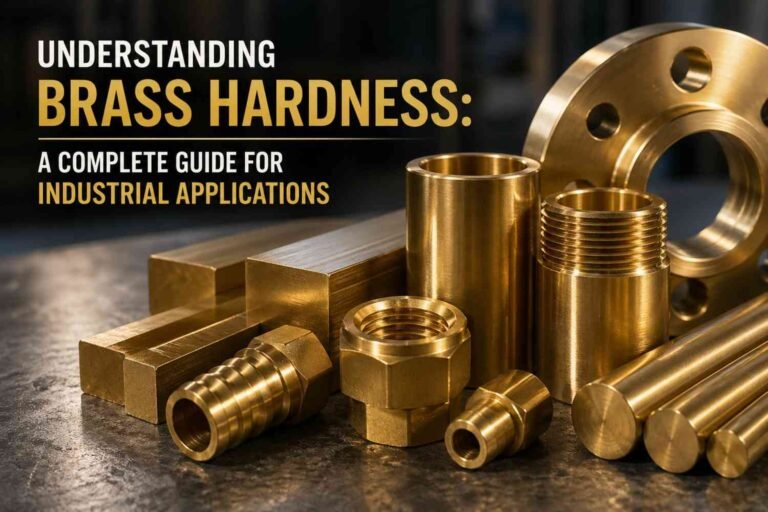
Brass is one of the most widely used metal alloys in industrial manufacturing, valued for its versatility, corrosion resistance, and mechanical strength. One of the most important properties that determines its performance in different applications is its hardness. Understanding brass hardness helps industries select the right type of brass for durability, machinability, and long-term efficiency.
What is Brass Hardness?
Hardness refers to a material’s ability to resist deformation, scratching, or indentation. In brass, hardness varies depending on its composition—primarily the ratio of copper and zinc—as well as the manufacturing process used. Brass can range from soft and highly ductile to relatively hard and strong.
Factors Affecting Brass Hardness
- Composition (Copper-Zinc Ratio)
The amount of zinc added to copper significantly affects hardness. Higher zinc content generally increases strength and hardness but may reduce corrosion resistance. - Cold Working Process
Brass becomes harder when it is mechanically worked (such as rolling or drawing). This process, known as work hardening, improves strength but reduces ductility. - Heat Treatment (Annealing)
Annealing softens brass by relieving internal stresses. This process is useful when flexibility and formability are required. - Alloying Elements
Small additions of elements like lead, tin, or aluminum can alter hardness and machinability depending on industrial needs.
Types of Brass Based on Hardness
- Soft Brass (Annealed Brass)
Highly ductile and easy to shape, ideal for applications requiring bending or deep drawing. - Half-Hard Brass
A balance between strength and flexibility, commonly used in general engineering components. - Hard Brass (Full-Hard)
Strong and wear-resistant, suitable for high-stress applications like fasteners and mechanical parts.
Importance of Brass Hardness in Industry
- Machining Efficiency
Harder brass may be more difficult to machine, while softer brass allows smoother cutting and shaping. - Wear Resistance
Industrial components like gears, valves, and fittings benefit from harder brass due to better durability. - Structural Strength
Applications requiring load-bearing capacity demand brass with higher hardness levels. - Corrosion Resistance Balance
Choosing the right hardness ensures optimal resistance without compromising strength.
Common Industrial Applications
Brass with different hardness levels is used in:
- Electrical connectors and terminals
- Plumbing fittings and valves
- Automotive components
- Marine hardware
- Decorative and architectural elements
Choosing the Right Brass for Your Needs
Selecting the appropriate brass hardness depends on the specific industrial application. If flexibility and shaping are required, softer brass is preferred. For durability and strength, harder brass is the better choice. Manufacturers must carefully evaluate performance requirements, environmental conditions, and cost-effectiveness before selecting the alloy.
Conclusion
Brass hardness plays a critical role in determining how the material performs in industrial settings. By understanding the factors that influence hardness and how it impacts usability, businesses can make informed decisions and optimize their manufacturing processes. Choosing the right type of brass ensures better performance, longer lifespan, and improved efficiency in industrial applications.